The Changing World Order: A Critical Analysis of Global Shifts in 2025
Introduction
The global order as we’ve come to know it is undergoing a fundamental transformation. Long-standing alliances are shifting, and institutions that once served as pillars of stability are facing unprecedented strain. At the centre of this transformation is the United States, whose evolving foreign policy is reshaping global power dynamics.
America’s Changing Global Stance
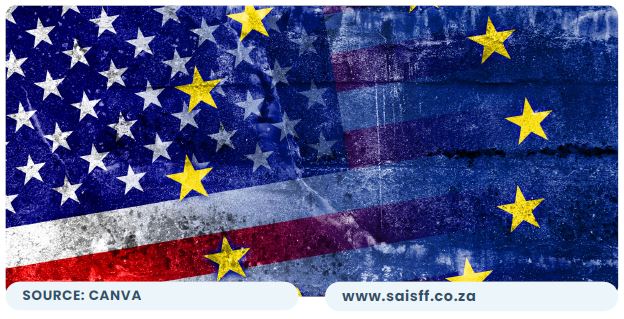
Over the past decade, the United States has signalled a shift away from the post-World War II international order that it helped establish. From military withdrawals to trade disputes, America’s alliances are being recalibrated. One of the most significant changes has been the U.S.’s reduced commitment to NATO, with tensions over defence spending and burden-sharing raising doubts about long-term American involvement.
Relations with European allies have grown more strained due to disputes over energy policies, sanctions, and economic competition. Beyond NATO, these signals could lead to further ripples in international relations and potentially forge new alliances.
Weakening of Global Institutions

The COVID-19 pandemic exposed deep divisions within the World Health Organization. U.S. disengagement and funding cuts highlighted vulnerabilities in global health governance. As new health alliances emerge, questions remain about the WHO’s effectiveness in coordinating future global health responses.
Similarly, the U.S.’s inconsistent climate commitments have weakened international climate policy coherence. As the Paris Accord struggles to enforce compliance, regional climate initiatives and alternative energy alliances may gain greater prominence.
Immediate Global Fallout
In Asia, the U.S.’s Indo-Pacific strategy faces challenges as regional players seek alternative security guarantees. Economic protectionism has intensified, with tariffs, sanctions, and reshoring policies complicating trade relationships. Countries that once relied on U.S. security and economic support are now exploring alternative partnerships, strengthening their ties with emerging blocs like BRICS+, and increasing cooperation with China and Russia.
These shifts reflect a broader move toward a multipolar world where the U.S. may no longer be recognized as the uncontested leader.
Understanding Deep Structural Shifts
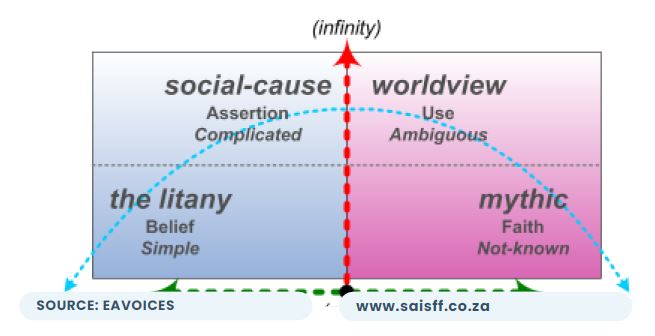
Geopolitical transformations are rarely sudden. History has shown that they emerge from long-term structural shifts in power, economic influence, technological advancements, and ideological struggles. To understand the deeper implications of these geopolitical shifts, we can apply Causal Layered Analysis (CLA).
Litany Level
At the surface, we observe headlines about institutional failures, increasing skepticism toward global governance, and the rise of new power centres challenging the U.S.-led order. These observations often follow distinct party lines but only scratch the surface of deeper systemic transformations.
Systemic Causes
The systemic social causes stem from shifts in economic power, particularly the rise of China and the BRICS phenomenon. Nationalist and protectionist policies are disrupting traditional alliances, while technological advancements in AI and cyber warfare are altering geopolitical leverage.
Worldview
The decline of a unipolar world has given way to a more multipolar structure. As regional power centres gain influence, the struggle between nationalism and globalism intensifies, affecting international collaboration and policy-making.
Myths and Metaphors
Cultural narratives underpin the geopolitical transformation. The belief that “Pax Americana is over” reflects the idea that U.S. dominance is in irreversible decline. The metaphor of “the empire retreats” captures the perception of America withdrawing from its global commitments.
Scenarios for the Future
Four potential scenarios emerge:
- U.S. Retrenchment: America prioritizes domestic stability and reduces international commitments. Europe, China, and regional blocs fill the power vacuum, reshaping the global order without direct U.S. leadership.
- Fragmentation and Chaos: The collapse of institutions leads to geopolitical disorder. Trade wars, military conflicts, and weakened global governance contribute to global instability.
- Reinvention of Global Institutions: A new multipolar governance model emerges. BRICS+, regional coalitions, and alternative financial systems reshape global decision-making structures.
- U.S. Reasserts Dominance: America re-engages with global institutions on new, more selective terms. Global institutions evolve rather than collapse, adapting to new geopolitical realities.
Impacts and Opportunities
For Futurists
- Greater uncertainty in global governance structures
- Increased fragmentation of geopolitical power
- Expanded demand for scenario planning and foresight analysis
For Entrepreneurs
- Rising geopolitical risks affecting supply chains and market access
- Emerging markets and regional trade blocs creating new investment avenues
- Growth in sectors like cybersecurity and alternative finance
For Technicians
- Technological sovereignty reshaping innovation landscapes
- Rise of independent and decentralized tech ecosystems
- Increased cybersecurity threats due to geopolitical rivalries
For the Average Person
- Economic uncertainty due to shifting trade and financial systems
- New career pathways in decentralized industries
- Increased self-sufficiency through localized production
Conclusion: The Road Ahead
The geopolitical decisions being made today will shape the next several decades. As the U.S. recalibrates its role, the world is shifting toward multipolarity, digital governance, and decentralized economic models.
The future may bring greater fragmentation or new forms of collaboration. The key questions remain:
- Will the U.S. seek to reclaim its global leadership, or will regional powers take the lead?
- Can international institutions adapt, or will they become obsolete?
- How will emerging technologies shape the geopolitical and economic order?
Ultimately, those who can anticipate and navigate these shifts—whether governments, businesses, or individuals—will be best positioned to thrive in the emerging world order.
Now is the time to think strategically and embrace innovation. The future is being written today.
As Prof. Chris Adendorff and Jacques van Wyk sat down to discuss these issues in the closing stages of 2023, little did they knw that the changes would be so profound, and so impactful this early on in 2025. They will continue to keep an eye on these critical events and certainly share their insights as they happen.
References
Council on Foreign Relations (CFR) – A comprehensive resource on U.S. foreign policy and global affairs. Link
U.S. Bilateral Relations Fact Sheets – Official U.S. government insights into foreign relations with different countries. Link
WHO Global Code of Practice – A policy document addressing international health governance and recruitment practices. Link
Causal Layered Analysis – Sohail Inayatullah – Foundational research on CLA as a foresight methodology. Link
World Economic Forum – Global Risks Report 2025 – Annual assessment of geopolitical and economic risks shaping the future. Link
Financial Times – China and Global Power – Analysis of the growing competition between China and the U.S. for geopolitical influence. Link
Reuters – Global Risks and Geopolitics – Report on how geopolitical tensions and conflicts are shaping the world order. Link